
Immersive Spatial Classrooms: VR and Digital Twin Labs Transforming STEM Education
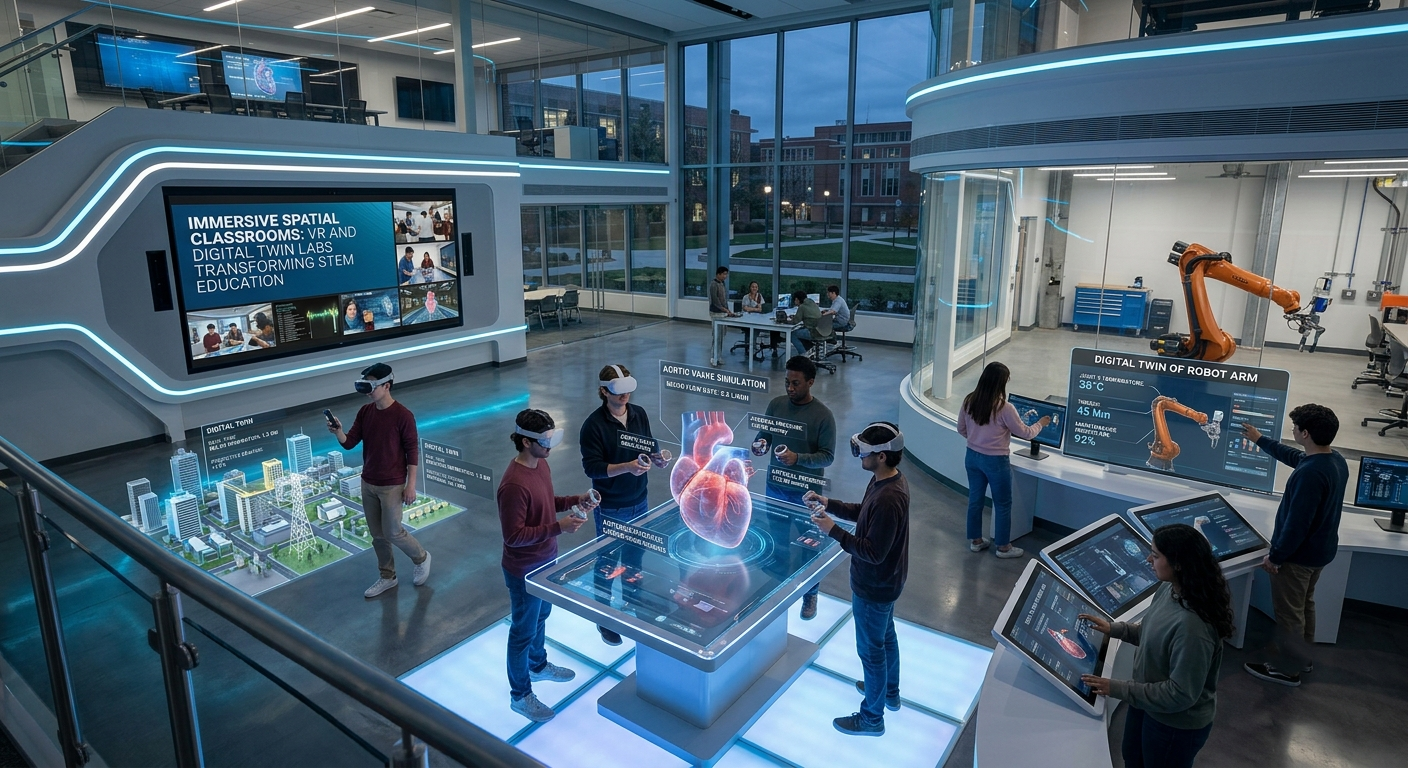
Spatial computing, augmented reality (AR), and virtual reality (VR) are turning abstract classroom textbooks into interactive 3D learning environments. Students can now dissect virtual cadavers, conduct high-risk chemistry experiments in digital twin labs, or tour historical sites remotely. This hands-on, experiential approach drastically boosts engagement, memory retention, and practical skill acquisition in global education.
What is it?
Immersive Spatial Classrooms use AR/VR headsets, 3D simulations, and digital twin technology to replicate complex physical objects, scientific laboratories, and historical events inside a interactive virtual environment.
Rais of it
Prohibitive laboratory equipment costs, safety risks associated with physical chemical experiments, and geographic barriers to specialized facilities catalyzed the rapid rise of virtual spatial education.
Continues to Expand
Spatial learning is expanding from university science departments into medical residency training, aviation flight schools, engineering design programs, and industrial trade apprenticeships.
Cloud Computing Enables Growth
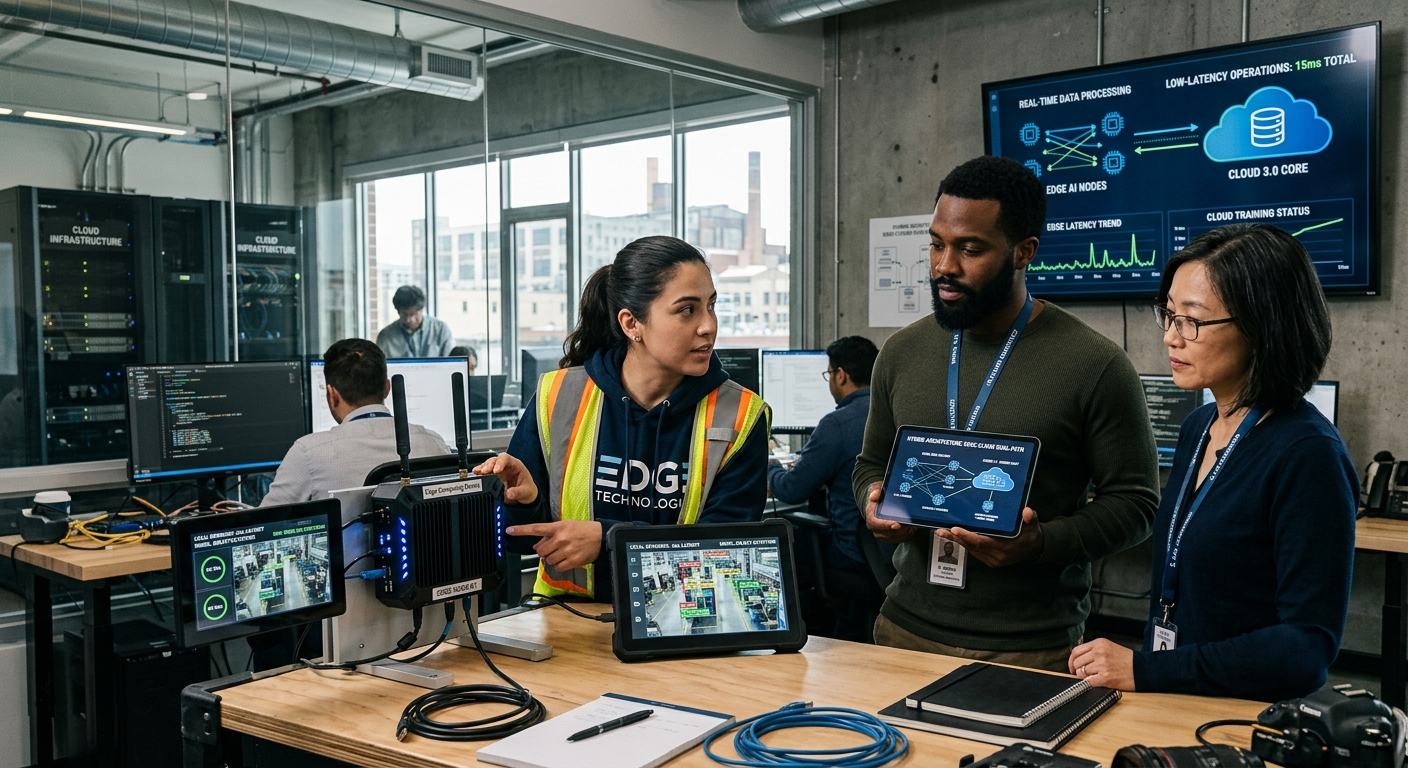
Cloud-based graphics rendering and edge computing stream high-fidelity 3D environments seamlessly to lightweight headsets and mobile devices, removing the need for expensive local processing servers inside schools.
Opportunities for Entrepreneurs
Entrepreneurs can build 3D educational software, virtual lab simulation platforms, interactive AR textbooks, and multiplayer immersive learning environments for remote student collaboration.
Challenges
Main challenges include high initial hardware deployment costs for headsets, content creation bottlenecks, potential user motion discomfort, and unreliable internet bandwidth in rural schools.
Future Outlook
Virtually all scientific and technical training will incorporate a digital-twin simulation, enabling students to gain thousands of hours of practical experience before entering real-world facilities.
Conclusion
Spatial computing makes expensive and high-risk educational experiences safe, accessible, and deeply engaging for learners everywhere.
Frequently Asked Questions
- 1. What is it?It is an educational approach that uses AR, VR, and digital twin technology to create interactive 3D simulations for experiential learning.
- 2. How does AI contribute to it?AI drives virtual non-player mentors, dynamically adjusts physical lab simulation scenarios based on student actions, and tracks spatial movement to assess mastery.
- 3. What industries benefit the most?Healthcare and medical education, aerospace, heavy manufacturing, architecture, and university STEM fields.