





The Virtual Patient: Digital Twins Accelerating Surgical Planning and Organ Simulation
About (in 60 words)
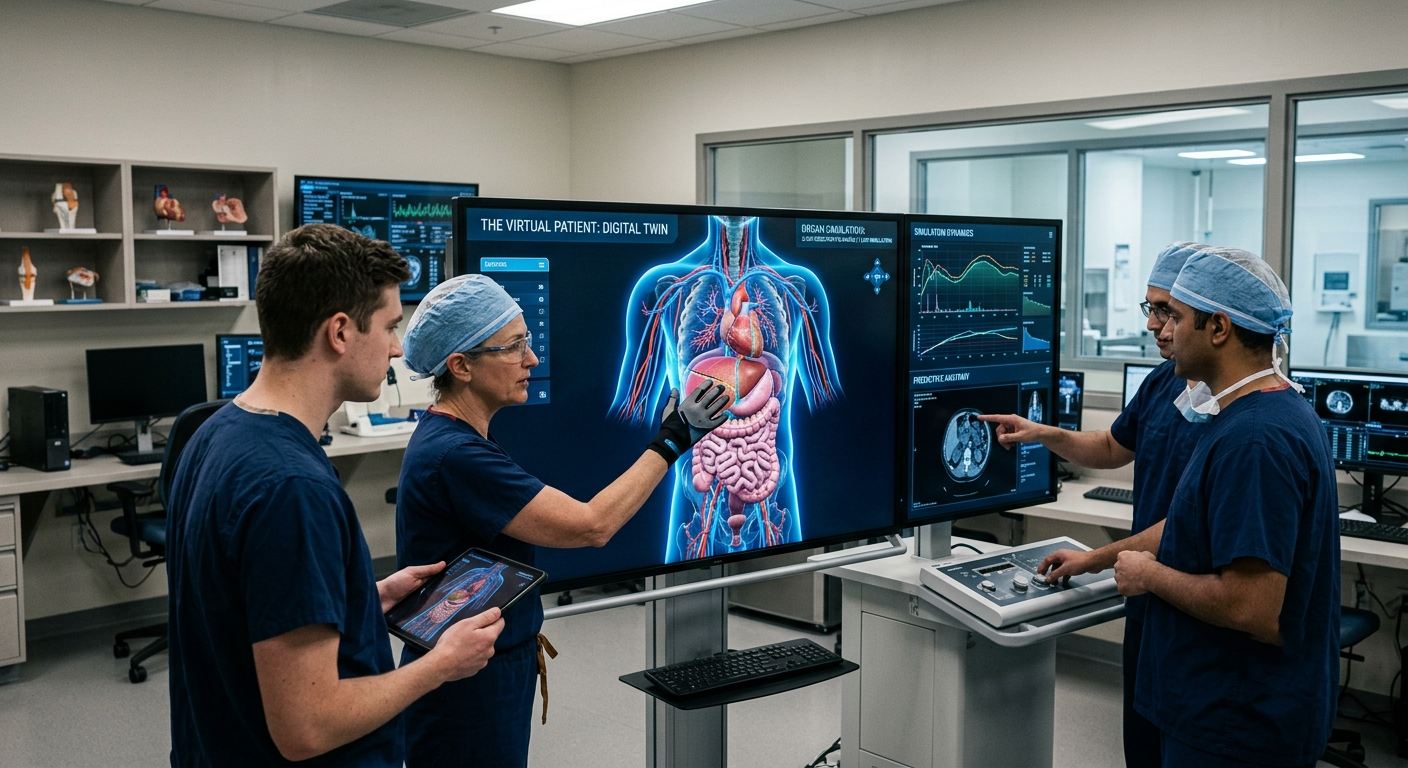
Digital twin technology creates virtual, highly accurate replicas of human organs, biological systems, or whole patient physiology. By aggregating real-time biomechanical and physiological data, medical teams can simulate surgeries, test complex drug reactions, and model disease progression risk-free before performing clinical procedures. This continuous simulation empowers doctors to deliver safer, predictive, and hyper-personalized healthcare solutions.
What is it?
A healthcare digital twin is a dynamic 3D digital representation of a organ, tissue, or physiological process created using medical imaging (CT, MRI, ultrasound), biomechanical measurements, and real-time biometric sensors.
Rise of it
The rise of digital twins in healthcare stems from the convergence of advanced 3D medical modeling, high-speed graphics processing, and the expansion of continuous health monitoring devices. The desire to minimize surgical complications and reduce costly clinical trial failures accelerated adoption.
Continues to Expand
Digital twins are expanding from cardiac and orthopedic surgical planning into full-system neurological simulations, oncology tumor growth modeling, and hospital operational management. Surgeons routinely use digital heart twins to rehearse complex structural repairs prior to entering the operating room.
Cloud Computing Enables Growth
Simulating complex organ physics and cellular interactions requires intensive parallel processing. Cloud platforms deliver on-demand high-performance computing (HPC) and GPU-accelerated rendering, allowing medical facilities to generate real-time 3D simulation twins without maintaining expensive physical supercomputers on-site.
Opportunities for Entrepreneurs
- Organ-Specific Simulation Software: Developing specialized modeling tools for cardiology, neurology, or orthopedics.
- In-Silico Clinical Trial Platforms: Virtual testing software that allows pharmaceutical startups to simulate drug trial outcomes on synthetic patient cohorts.
- Surgical Rehearsal VR Integration: Combining digital twin models with spatial headsets to allow surgeons to practice delicate procedures.
Challenges
- Mathematical complexity of modeling unpredictable biological software and fluids.
- Integration hurdles when extracting continuous data across disparate electronic health record (EHR) systems.
- Need for rigorous regulatory clearance before using virtual models for formal surgical decision-making.
Future Outlook
Digital twin technology will expand from individual organ models to full-body “whole-patient” digital twins that track a person’s health throughout their lifetime, predicting chronic disease onset years before physical symptoms appear.
Conclusion
By bridging computational modeling and clinical medicine, digital twins remove trial-and-error from surgery and therapeutics, significantly increasing patient safety.
Frequently Asked Questions
- 1. What is it? It is a virtual, real-time 3D digital model of a patient’s organ or biological system used to simulate medical treatments and predict surgical outcomes.
- 2. How does AI contribute to it? AI processes multimodal imaging and biometric data to continuously update the twin’s physiological behavior, simulating how the organ will react to interventions.
- 3. What industries benefit the most? Cardiothoracic and orthopedic surgery, medical device manufacturing, pharmaceutical development, and clinical research institutions.